Mindfulness is a word we come across almost daily now and particularly in regards of mental health.
Brain research has shown that we can change our brain with our mind and it is evident that living mindfully has a very positive impact on many areas of our lives. It isn’t something new as Buddhism and other traditions have been using mindfulness as a daily practice for a very long time, but it finally has found a wider recognition in our society in playing a vital part towards our health and well-being.
Jon Kabat-Zinn defines Mindfulness as :
“The awareness that emerges through paying attention on purpose, in the present moment, non- judgmentally to the unfolding of experience moment to moment.”
As I explore the gifts of mindfulness in my own life I notice that the joy of any experience lies within its presence or absence. For example: We all have our little morning routines. One of mine is to make myself a hot lemon drink. Obviously there are many ways I can go about it and experience this event.
I discovered that it is not so much what I do but how I do it. I can for example stumble into the kitchen grab the lemon and the cutting board whilst I run through the list of things I need to do. Whilst I am cutting the fruit I remember an incident from yesterday, a conversation I had. Then I look for the juicer, imagining how that person must feel like in their own life. As I pour the juice into the glass I remember to check my car into the mechanics. The kettle boiled and I pour the hot water in the cup together with the lemon juice. I grab my cup still thinking about the car and start worrying about the problems it may have as I wander back into my bedroom.
Now imagine the second version: I wake and have a good stretch, feeling the warmth and weight of my blanket, taking my time to connect with my body sensations.
Then I push off the blanket and feel the fresh air on my skin, roll out of my bed gently, placing my feet on the ground, feeling the smooth soft wood underneath them. As I walk into the kitchen I notice some stiffness in my joints though slowly easing off as I move. I grab a lemon feeling its nobly waxy skin in my hand. As I cut it the lemon smell evaporates into the air and little squirts of juice touch my hands. I boil the kettle. I am hearing the bubbly noise and the click to switch it off. Then as I poor the hot water I see the steam rising through the morning light. I grab my cup feeling the weight of it as I walk back into my bedroom.
I am sure you get a sense of what I am trying to say, nothing seems to bring joy if we are not doing it mindfully: aware of our senses and feeling. Most of us most of the time live in our heads. The simplicity of bringing the mind back to our senses brings us back to the present moment. This is available to us every single moment and the shift I notice is actually quite big, metaphorically speaking, from a small black and white box to an open colourful space. I feel that the whole world is opening up when I shift from the minds conceptions to an open mind of curiosity and wonder.
Now I don’t deny processes we need to think through as we inquire and investigate our lives, but we may find more joy and make change in our lives more easily with awareness and mindfulness.
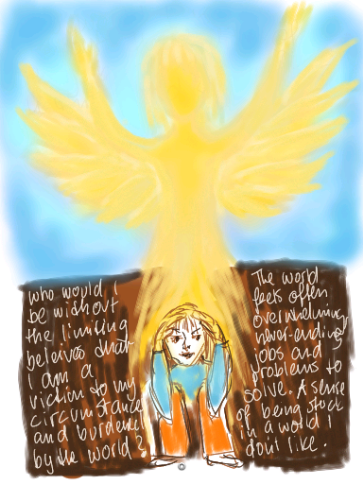
Even negative thoughts and feelings, when met with an open, accepting mind dissipate more easily and quickly. The tricky thing is of course that we by default move in the opposite direction: which is to avoid, resist and distract ourselves from those unwanted thoughts and feelings. We keep busy with mental things, computers, entertainment and/or drugs so we don’t have to feel.
Unfortunately we throw out the bad feelings with the good ones and slowly become more numb, dull and disconnected. Enjoyment then becomes more and more something we believe we get through something outside ourselves. But it never satisfies us and so we become these hungry, restless ghosts looking always for more but never finding what we are looking for.
The good news is that there is a simple remedy for restlessness and unhappiness: to explore the simplicity of coming back to your senses and explore mindfulness in your life, little moments at a time. You may stumble and doubt the effectiveness at times but the more you practice the better it gets and you may even find it becomes addictive!
Blessings to you all.
Claudia M Gyr
Offering mindfulness based, body-centered Art Therapy
and sell personal shrine making kits (check out personal shrines page).